A lot of Keswick homes started life as summer places. Some were winterized later, some were extended, and some were simply lived in year-round without much change. That history shows up every winter in two ways: ice building along the roof edge, and floors that never feel warm.
Both problems have the same root. The house is losing heat where it should not. Here is how each one happens and how to fix it.
Problem one: ice dams
How an ice dam forms
- Heat escapes from the living space into the attic.
- The roof deck warms and the snow on it melts from underneath.
- Meltwater runs down to the eaves, which overhang the house and stay cold.
- The water refreezes there, building a ridge of ice.
- More meltwater backs up behind the ridge and can work its way under the shingles.
Natural Resources Canada’s Roofs and attics guide ties ice damming to heat escaping at the perimeter of the attic floor. We go deeper in why your home gets ice dams by the lake.
How to stop it
The aim is a cold roof: keep the heat in the house and let the attic stay near outdoor temperature.
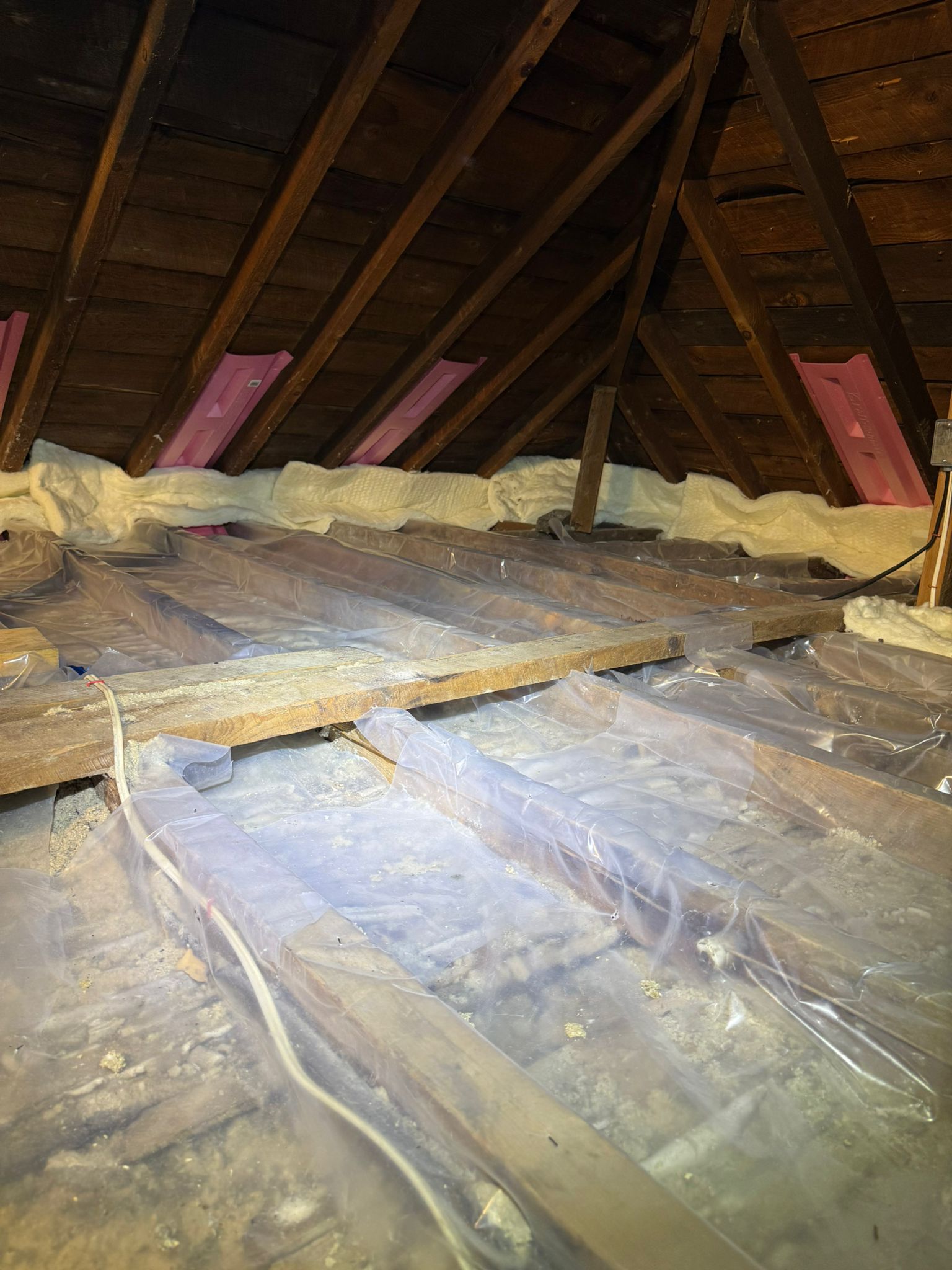
- Seal the attic floor. The same guide says air leaks at chimneys, vents, pipes and electrical boxes can account for substantial heat loss.
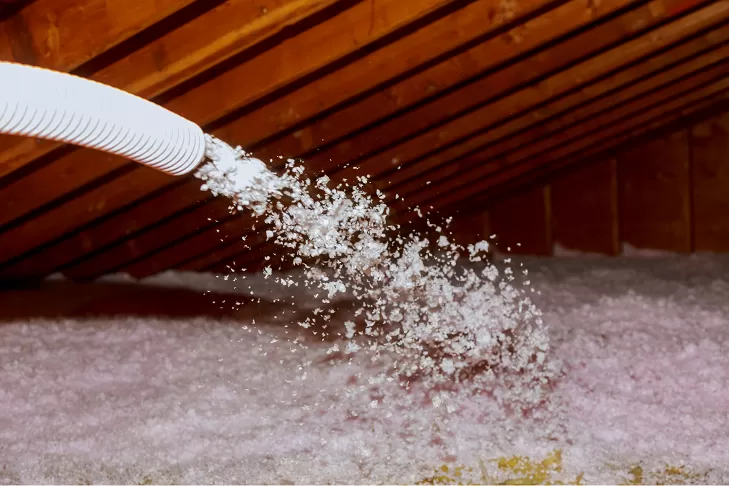
- Insulate to full depth, right to the edges. Our attic insulation service in Keswick uses blown-in cellulose or fibreglass.
- Keep the eaves ventilated with baffles, so cold air washes the underside of the roof.
- Replace anything already damaged. Past ice dams often leave wet insulation behind. See attic mould and insulation removal in Keswick and our removal service.
Chipping ice off the roof treats the symptom. It does nothing about the heat that caused it.
Problem two: cold floors
Why the floor is cold
Many former cottages sit on crawlspaces or piers, not full basements. If the floor above is uninsulated, or the crawlspace is open to outside air, the floor is only a few degrees warmer than the ground. Natural Resources Canada notes that the lower part of a house can lose more heat than a typical attic. We explain the details in why your lakeside floor is so cold and how to fix it.
How to stop it
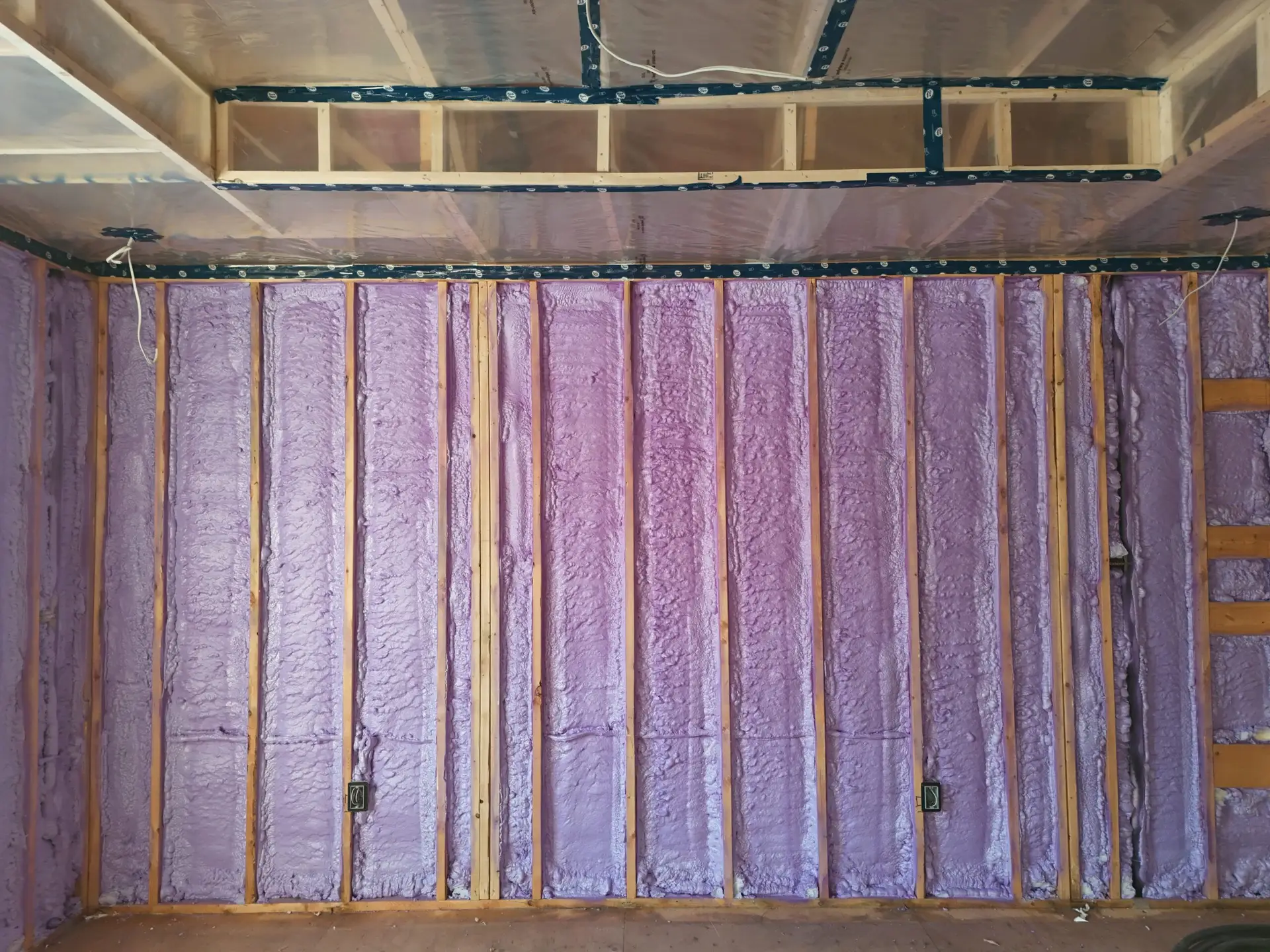
- Insulate and air seal the floor or crawlspace walls with spray foam insulation. Closed-cell foam, described on our 2 lb high-density spray foam page, suits damp locations.
- Control ground moisture with a vapour barrier.
- Seal the rim joist, where the floor framing meets the foundation.
The smaller jobs that help both
- Weatherstrip doors, windows and the attic hatch.
- Close up gaps where pipes and wires enter the house.
- Keep heat registers clear and change the furnace filter.
Why seasonal-built homes struggle
A house designed for summer has thin insulation, lots of air leakage and often a floor open to the air below. Our posts Keswick homes were built for August, not February and the insulation problem the rest of York Region does not share cover the background.
What it is worth
The U.S. EPA estimates average savings of 15% on heating and cooling costs from air sealing and adding insulation in attics, floors over crawl spaces and basements (ENERGY STAR). That is a modelled U.S. average. A poorly insulated former cottage may see a different result.
Rebates may apply to this work. See our post on the insulation rebate in Keswick and the energy rebate page, and confirm current amounts before you budget.
Not sure which problem you have?
Check the signs your Keswick attic needs an upgrade before winter, then contact us for an estimate.