Drive along the Lake Simcoe shoreline in Keswick, Willow Beach or Jackson’s Point and you’ll see many homes that started out as summer cottages. Over the decades, they were winterized, expanded and turned into year-round homes. Alongside them are newer subdivisions built as Keswick has grown.
Cottages were never designed for an Ontario winter. When one becomes a full-time home, the attic is often the weakest part, and attic mould is a common result.
Why Converted Cottages Get Attic Mould
- Built for summer. Original cottage roofs often had little or no insulation and no planned ventilation.
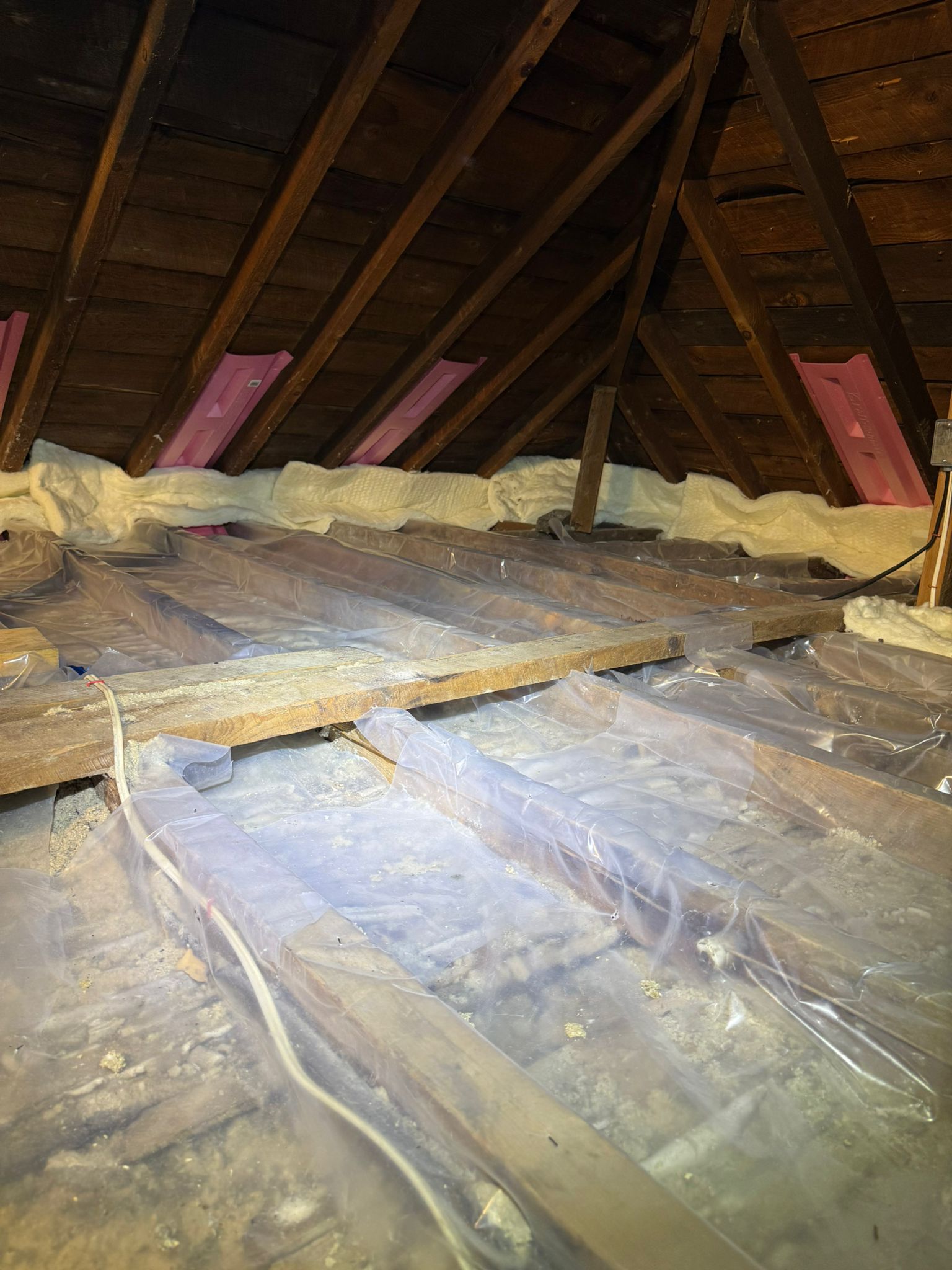
- Insulation added later, often unevenly. Batts may have been laid in without baffles, blocking whatever airflow existed.
- Low-slope and shallow roofs leave little room for insulation and air movement.
- Additions on additions. Each new section can create its own unventilated attic pocket.
- Lake humidity. Homes close to the water face more humid air in spring and summer.
- More people, more moisture. Year-round living adds showers, cooking and laundry that a cottage never had.
How the Seasons Affect a Keswick Attic
Winter
Warm, humid air from the living space leaks into a cold, thinly insulated attic. It condenses on the roof boards and freezes. Ice dams along the eaves are common in converted cottages because so much heat escapes through the ceiling.
Spring
Frost melts. Water stains appear on ceilings, insulation goes flat and wet, and a musty smell builds. This is the season most Keswick homeowners discover a problem.
Summer
Lakeside humidity and hot, poorly ventilated attics make a damp combination. Attic ductwork for AC, if not sealed and insulated, can sweat.
Fall
Get ahead of winter: clean eavestroughs, vent fans outdoors, seal the attic hatch and check that soffits are open.
How Attic Mould Is Treated
- Assess. Health Canada considers a mould area under about 1 square metre small. A single patch over about 3 square metres is large and should be handled by a qualified professional.
- Remove old and damaged insulation. In converted cottages, the old insulation often needs to come out completely. Our attic insulation removal service in Keswick clears it out cleanly.
- Clean the wood. Surface mould is cleaned and the wood dried. Rotted boards may need a roofer.
- Air seal. Seal every gap between the living space and the attic. AeroBarrier air sealing is especially useful in older homes with many hidden leaks.
- Add ventilation. Install baffles, vent fans outdoors and add a vapour barrier where missing.
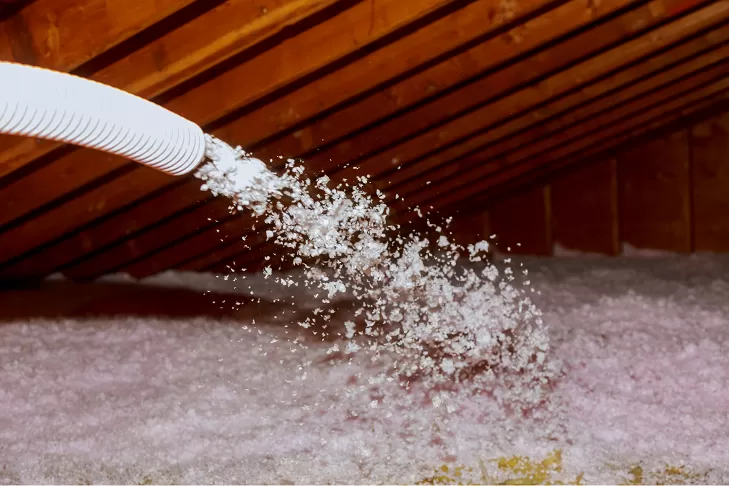
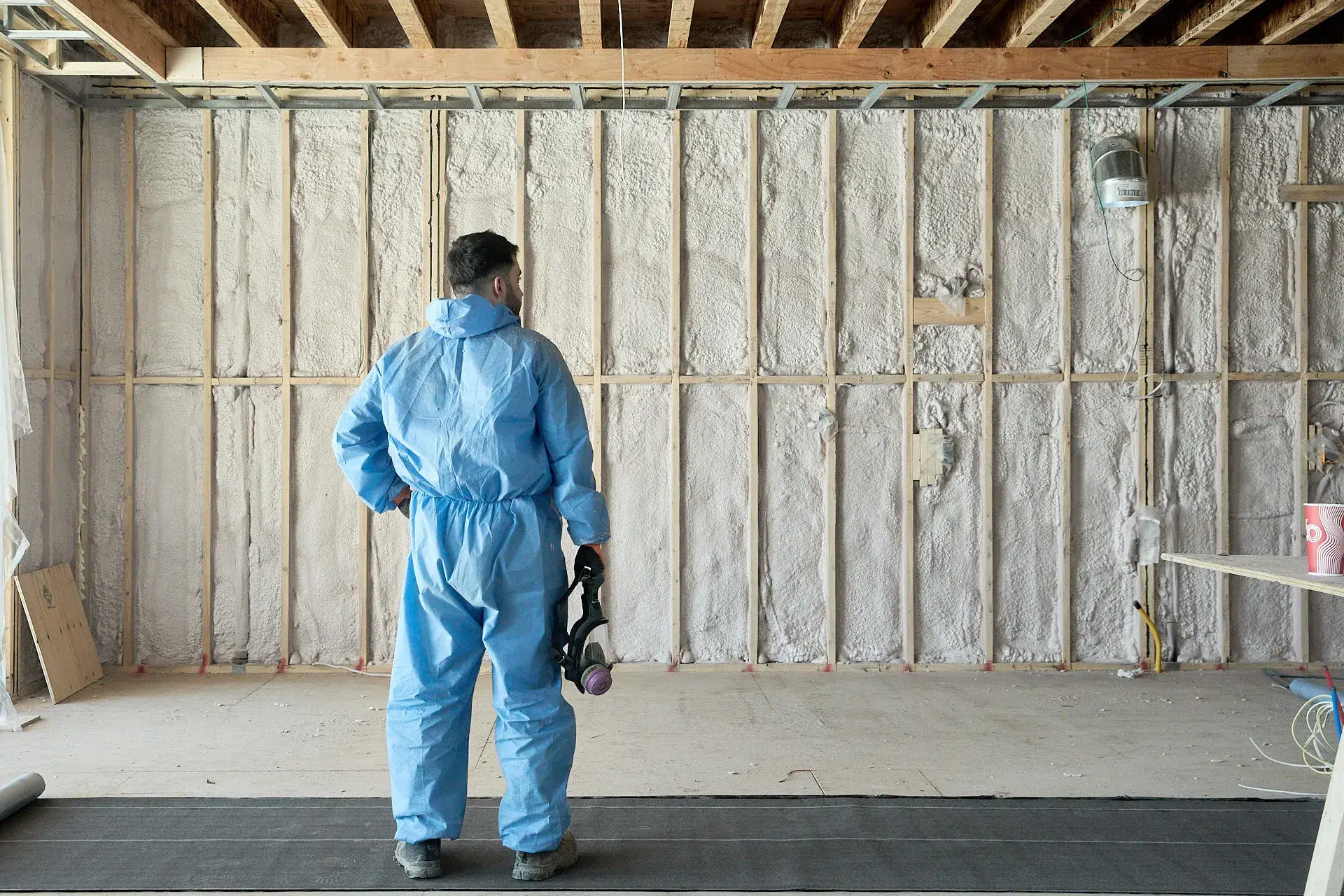
- Re-insulate properly. Low-slope and shallow roofs often do best with 2 lb closed-cell spray foam, which insulates and air seals in a thin layer. Full-height attics can use cellulose blown-in or fibreglass blown-in insulation. See all spray foam insulation options in Keswick.
Replace damaged ceilings, and use moisture-resistant drywall in bathrooms.
Prevention for Keswick Homes
- Treat a converted cottage’s attic as a full upgrade, not a patch
- Air seal the ceiling
- Keep soffit-to-roof airflow open
- Vent fans outdoors
- Insulate to current levels (attic insulation in Keswick)
- Inspect in spring and fall
Upgrades may qualify for rebates. See our home renovation rebate page.
Frequently Asked Questions
My home used to be a cottage. Does it need a full attic upgrade?
Often, yes. Cottage attics were rarely built for winter, so insulation, air sealing and ventilation usually all need work.
What insulation works for a low-slope cottage roof?
Closed-cell spray foam is often the best fit because it provides high insulation value in a thin layer and also seals air.
Does living on Lake Simcoe make attic mould worse?
Lake humidity can add moisture, but the biggest factors are air leaks and ventilation.