There’s a complaint we hear constantly in Keswick’s lakeside homes and former cottages: the floor is freezing. Socks-and-slippers-in-October freezing. You crank the heat and the air warms up, but the floor stays cold underfoot all winter.
It’s almost never the heating system. It’s what’s under the floor — and in a Lake Simcoe home built as, or from, a cottage, that’s usually the problem. Here’s why, and how spray foam fixes it.
Why lakeside and former-cottage floors run cold
A lot of Keswick’s housing started life as a cottage or a modest lakeside home, built to a summer standard. That history shows up most in the floor, because these buildings sit on foundations that were never meant for a Canadian winter:
Slab-on-grade. The home sits on a concrete slab poured directly on the ground. Concrete is a heat sink — it pulls warmth from the floor straight into the cold ground. A bare, uninsulated slab is cold underfoot no matter how warm the air is.
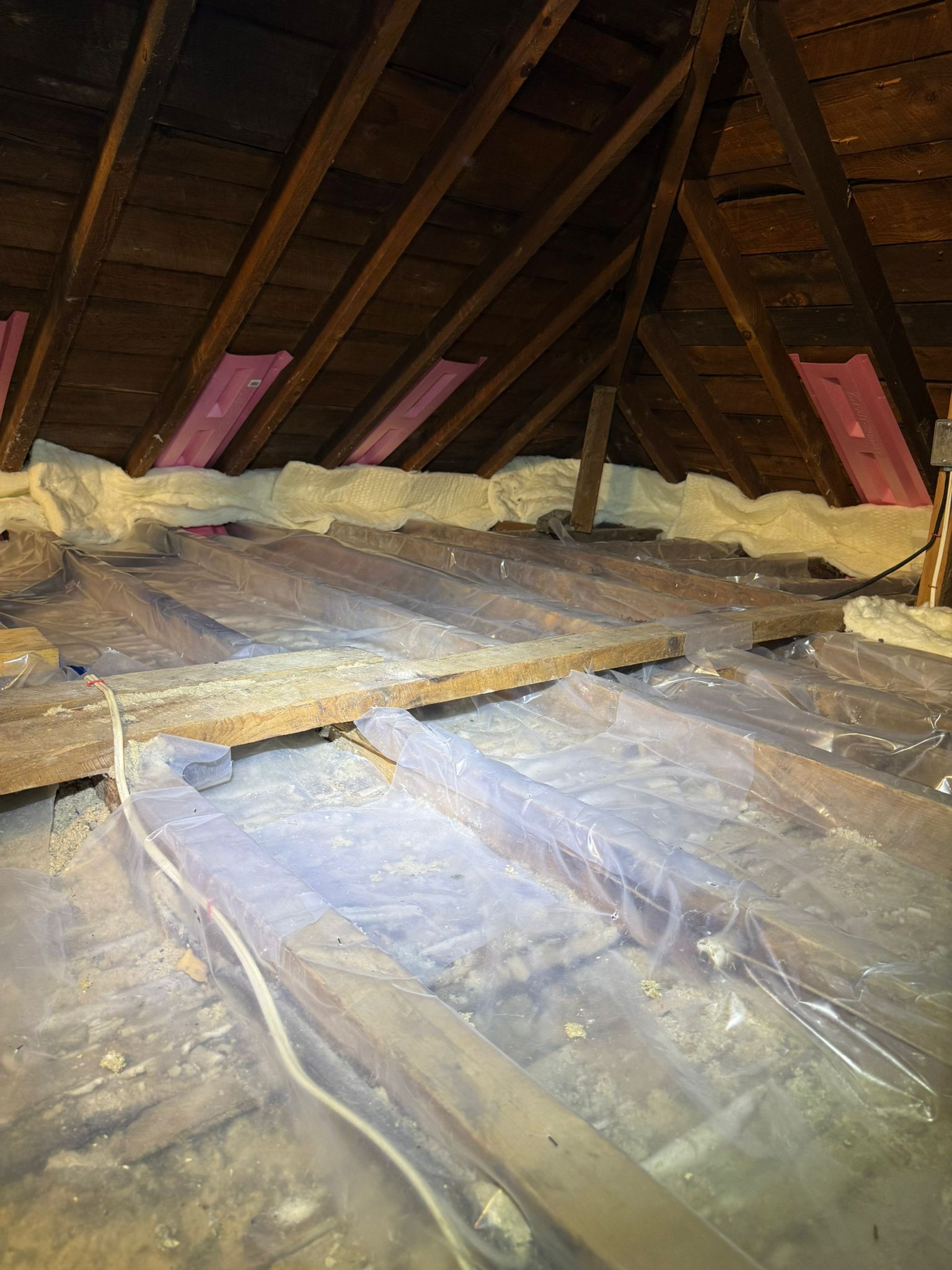
Shallow or vented crawlspace. Many sit over a low crawlspace, often vented to the outside and sometimes with a dirt floor. Cold (and damp) outdoor air circulates directly under your floor all winter.
Raised on piers or posts. Some lakeside homes are raised, with open air underneath — great for flooding, brutal for cold floors, with nothing between your floor and the outdoor air.
In every case, the fix is the same idea: put a proper thermal-and-air barrier between your floor and the cold below. Spray foam is the tool that does it, because it seals and insulates the irregular, awkward spaces these foundations create.
The two products, briefly
| ½ lb open-cell | 2 lb closed-cell | |
|---|---|---|
| Approx. R per inch | ~R-3.5 – R-3.8 | ~R-6.0 – R-7.0 |
| Own vapour barrier? | No | Yes, at sufficient thickness |
| Moisture | Absorbs | Resists |
| Best here for | Interior walls, sound | Slabs, crawlspaces, floors, rim joists — anything cold or damp |
By the lake, closed-cell is the workhorse — its moisture resistance matters near water, and it delivers the most R-value in the shallow spaces these homes have.
½ lb open-cell → · 2 lb closed-cell →
The fix, by foundation type
If you’re on a crawlspace
The most common case, and the one with the biggest payoff.
- Fix any drainage or standing water first — non-negotiable near the lake (see below)
- Lay a ground vapour barrier over any exposed soil
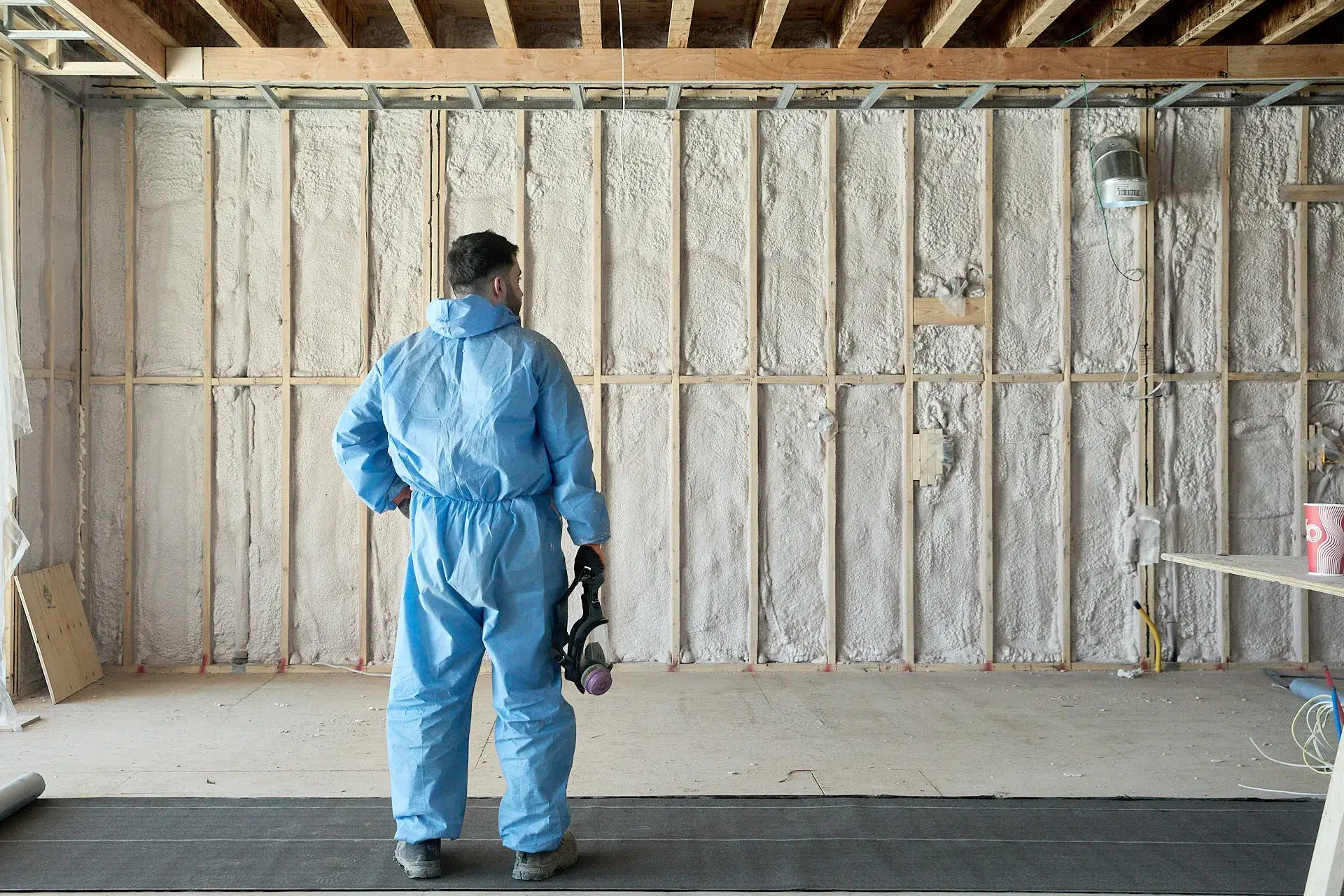
- Spray closed-cell foam on the crawlspace walls and seal the rim joist and perimeter
This turns a cold, vented, damp crawlspace into a sealed, insulated, conditioned space — which warms the floor above, protects your plumbing from freezing, and controls the moisture that comes with being near water.
Rebate note: crawlspace walls (up to $1,200) and crawlspace ceiling (up to $1,200) are each rebate measures. Keswick rebate guide →
⚠️ Sealing a crawlspace is a system — vapour barrier, wall foam, rim joist, plus attention to any combustion appliances (furnace, water heater) and radon. Near the lake, the moisture and drainage picture must be assessed first.
If you’re on a slab
You can’t easily insulate under an existing slab without tearing it up. But you have options:
- When building up the floor — if you’re putting in a new subfloor or finished floor anyway, rigid or sprayed insulation can go in at that stage, breaking the slab’s cold contact with your living space.
- Perimeter and edges — much of a slab’s heat loss is at the exposed edges; sealing and insulating there helps.
- Everything else that touches the cold — walls, rim areas, and any exposed edges.
An assessment determines what’s practical for your specific slab.
If you’re raised on piers or posts
Where the floor has open air underneath and it’s accessible, closed-cell foam sprayed into the floor structure from below insulates and air-seals it — stopping the cold air from stealing heat through the floor and helping protect the plumbing.
The rim joist and the rest of the envelope
Whatever the foundation, the rim joist (the band around the top of the foundation or the perimeter of a raised floor) is a continuous air leak. Closed-cell seals and insulates it — cheap, high-impact, and a qualifying rebate measure ($300).
And if the walls are uninsulated (common in older lakeside homes) and can’t be opened, drill and fill insulates them through small holes. The attic, meanwhile, is usually best served by cost-effective blown-in. Attic insulation →
The rule that matters most by the lake: moisture and water first
Lakeside properties have moisture challenges an inland home doesn’t — higher humidity, higher water tables, and sometimes seasonal flooding risk near the shore.
Insulation does not fix a wet crawlspace or a drainage problem, and foam over damp conditions hides it instead of solving it. Before any foam goes under a Keswick home:
- Drainage, grading, and any water intrusion addressed
- The crawlspace or slab’s moisture behaviour assessed
- Any flood-risk considerations accounted for
By the lake, this step isn’t optional — it’s what separates a fix that lasts from one that grows mould in its second winter.
Practical questions
Why is my floor cold when the air is warm? Because the floor is losing heat to a cold slab, crawlspace, or open space underneath. Warm air doesn’t fix a cold surface — you have to insulate what’s below the floor.
Do I need to leave during spray foam? We install Insulthane Extreme by Elastochem and residents can generally remain; we’ll discuss ventilation and re-entry, and flag any respiratory sensitivities. Crawlspaces with a furnace or water heater need combustion safety planned in.
Will this stop my pipes from freezing? Sealing and insulating the crawlspace or floor structure is a big part of freeze protection, alongside proper plumbing runs. We assess the whole picture.
Can I foam my own crawlspace with a kit? Not advised beyond small gaps — it’s a system (vapour barrier, wall foam, rim joist, combustion and radon considerations), and getting one part wrong causes moisture or air-quality problems.
Does this qualify for rebates? Crawlspace, exposed floor, and rim-joist measures each qualify depending on R-values and coverage — and you don’t need natural gas to be eligible (propane/oil/electric homes on the grid qualify too). Keswick rebate details →
⚠️ Program terms change — confirm at homerenovationsavings.ca.
Get the cold floor diagnosed at the source
A cold lakeside floor is fixable — but only by addressing what’s under it, in the right order, with the moisture handled first. We’ll assess your foundation type, tell you what will actually warm the floor, and quote a fixed price.
Pro Insulation Contracting has insulated Ontario homes for over 10 years and serves Keswick, Georgina, and the Lake Simcoe area.
📞 (416) 315-0471 · Book a free assessment →