If you live in Keswick, you know the Lake Simcoe winter. Wind off the lake, heavy snow, the freeze-thaw swings — and every year, ice building along the eaves, icicles hanging off the gutters, and maybe a water stain appearing on a ceiling in February.
Most people file that under “just what winter does here.” It isn’t. Ice dams are an attic problem, not a weather problem — the weather just exposes it. And a Lake Simcoe home, with its harder winters, gets exposed harder than most.
Here’s what’s actually causing the ice, and the fix that stops it.
What an ice dam actually is
It looks like the cold is the problem. It’s the opposite — heat is the problem.
Here’s the sequence:
- Heat escapes from your living space up into the attic
- That heat warms the roof deck from below
- Snow on the warm part of the roof melts
- The meltwater runs down to the cold eaves — the roof edge that overhangs beyond your heated walls
- At the cold edge, it refreezes, building a ridge of ice — the dam
- More meltwater backs up behind the dam, pools, and works its way under the shingles — and into your ceilings and walls
So those icicles and that ridge of ice aren’t just cosmetic. They’re the visible sign that your attic is leaking heat and that water is being forced backward under your roof.
Why Keswick homes get it worse
Lake Simcoe stacks the odds:
Lake-effect snow. Georgina and the south shore of Lake Simcoe get significant snowfall, including lake-effect snow. More snow on the roof means more raw material for the melt-and-refreeze cycle.
Freeze-thaw swings. Lakeside temperatures cycle around the freezing point — melt during a mild spell or a sunny afternoon, refreeze overnight. That cycling is exactly what builds ice dams, and lake areas see a lot of it.
Wind exposure. Wind off the lake drives cold hard against the house and strips heat, while also affecting how snow loads and drifts on the roof.
Older lakeside housing. A lot of Keswick’s stock started as cottages or modest lakeside homes, built with little insulation and less air sealing — the exact conditions that let heat leak into the attic and start the cycle.
Put together: more snow, more freeze-thaw, and homes that leak heat. That’s why ice dams are a Keswick regular.
The fix: it’s not the roof, it’s the attic
People try to fight ice dams at the roof — raking snow, running heat cables along the eaves, chipping the ice off. Those are band-aids that treat the symptom every winter, sometimes damaging the roof in the process.
The real fix is to stop heat from reaching the roof deck in the first place. That means three things in the attic, done together:
1. Air seal the ceiling
The biggest driver. Warm air leaks up through gaps in the ceiling — around wiring, plumbing stacks, the chimney chase, light fixtures, the attic hatch — and directly warms the attic and roof deck. Sealing those leaks keeps the heat in your rooms where you want it, and out of the attic where it melts snow.
Air sealing comes first, before insulation. Vapour barrier and air sealing →
2. Insulate to full depth — all the way to the eaves
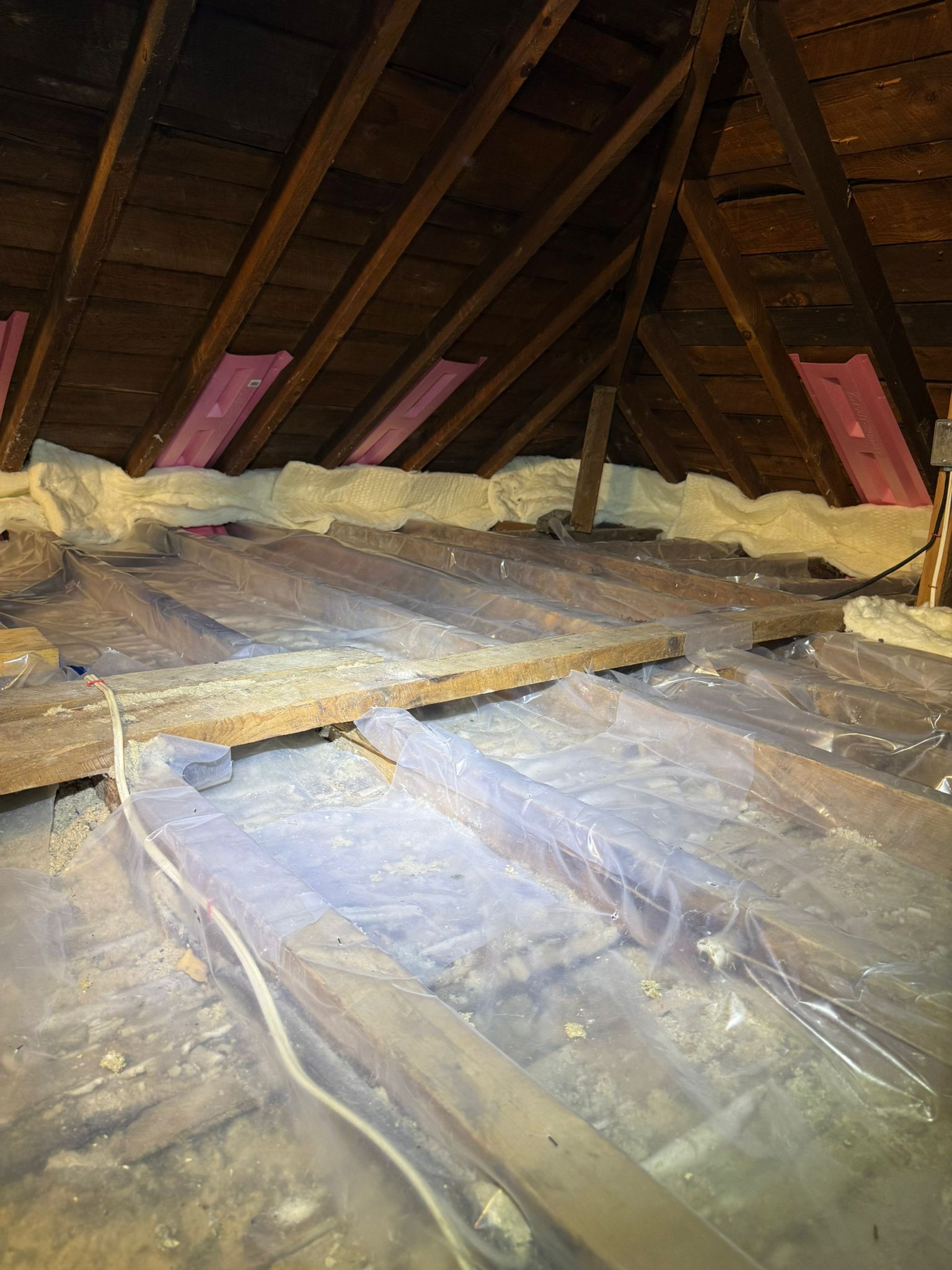
A consistent, deep layer of insulation keeps the whole roof deck uniformly cold, so snow doesn’t melt unevenly. The eaves matter most here — the perimeter is where dams form, and it’s the spot most often left thin. Insulation has to reach right to the edge.
3. Ventilate the attic properly
A well-ventilated attic stays cold, which is what you want in winter — cold air in at the soffits, out at the ridge, carrying away any stray heat and keeping the roof deck an even temperature. Blocked soffit vents are a major ice-dam cause, and blown-in insulation will bury them unless baffles hold them clear. Baffle installation →
Do all three and the roof deck stays cold and uniform, snow melts evenly (or not at all until spring), and the dam never forms. That’s the fix that actually lasts — no cables, no roof-raking, no annual battle.
While you’re up there: check what’s causing the heat leak
The same assessment that solves ice dams usually finds the other things costing you:
- Not enough insulation. Measure the depth: push a ruler to the drywall at several spots.
| Material | R per inch | 8 in | 12 in | 16 in |
|---|---|---|---|---|
| Blown cellulose | ~3.4 – 3.8 | ~R-28 | ~R-42 | ~R-56 |
| Blown fibreglass | ~2.7 – 3.0 | ~R-22 | ~R-34 | ~R-45 |
Target R-50 minimum (rebate threshold), R-60 ideal.
- A bathroom fan venting into the attic — pumping warm, moist air straight onto the cold roof deck. Common, and a double problem: it feeds ice dams and causes attic moisture.
- Old or contaminated insulation — if it’s wet (perhaps from past ice-dam leaks), mouldy, or rodent-damaged, it may need removal before new goes in. Attic insulation removal →
The cold room over the garage is separate
If a room over the garage is always cold, that’s a garage-ceiling issue, not an attic or ice-dam one — its floor sits over an unheated garage. Different fix. Garage ceiling insulation →
What a proper job looks like
- Assess — measure depth, check ventilation, look for the heat-leak points and any past water damage from ice dams
- Remove contaminated or water-damaged insulation if present
- Air seal the ceiling plane
- Confirm soffit intake and install baffles — restore the airflow that keeps the deck cold
- Insulate and weatherstrip the hatch
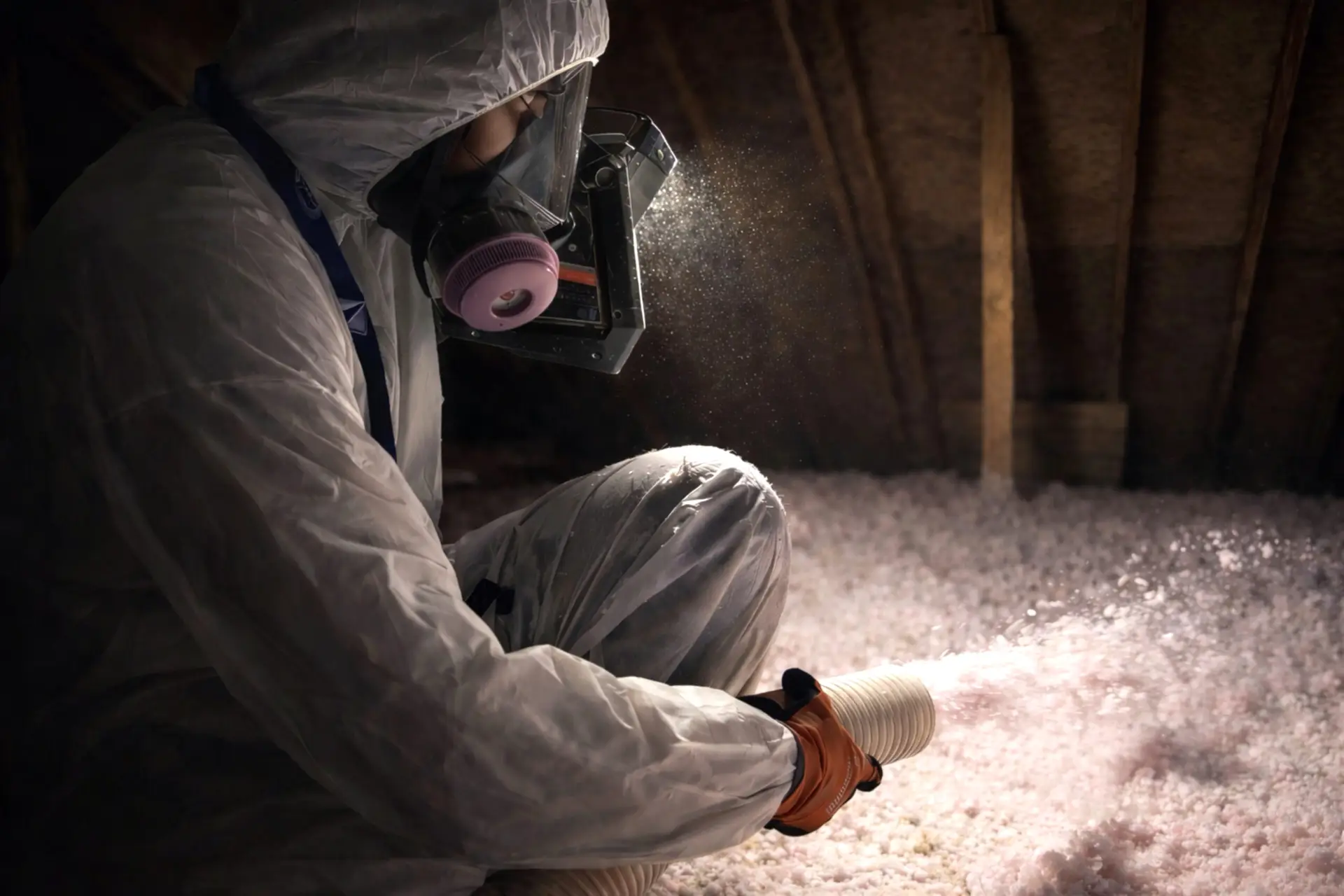
- Blow to full depth, right to the eaves — R-50 minimum, R-60 target
- Mark depths so the result is verifiable
Cellulose blown-in → · Fibreglass blown-in →
Frequently asked questions
Why do I get ice dams / icicles every winter? Heat leaking from your home into the attic melts snow, which refreezes at the cold eaves and builds a dam. It’s an attic air-sealing, insulation, and ventilation issue — not just weather.
Won’t heat cables on the roof fix it? They can reduce the symptom but don’t address the cause, they add to your electricity bill, and they can damage shingles. Fixing the attic solves it at the source.
Can ice dams actually damage my house? Yes — water backing up under the shingles can leak into ceilings, walls, and insulation, causing stains, rot, and mould. It’s worth fixing before it does.
Does more insulation alone fix ice dams? Not on its own — you need air sealing and proper ventilation too. Insulation without those can even shift the problem around. All three together is the fix.
Do I have to remove old insulation? Only if it’s wet, mouldy, or rodent-contaminated. Otherwise new goes over old and R-values add.
Do I have to leave home during the work? No.
Stop fighting ice every winter — fix the cause
If you’re raking snow or running heat cables every year, you’re treating the symptom. A proper attic assessment finds where the heat is leaking and fixes the ice dams at the source — with the bonus of a warmer home and a lower heating bill.
Pro Insulation Contracting has insulated Ontario homes for over 10 years and serves Keswick, Georgina, and the Lake Simcoe area. Free on-site assessment, written scope, fixed price before any work starts.
📞 (416) 315-0471 · Book a free attic assessment →